

Published: Nov. 08, 2026, 5:35 a.m.
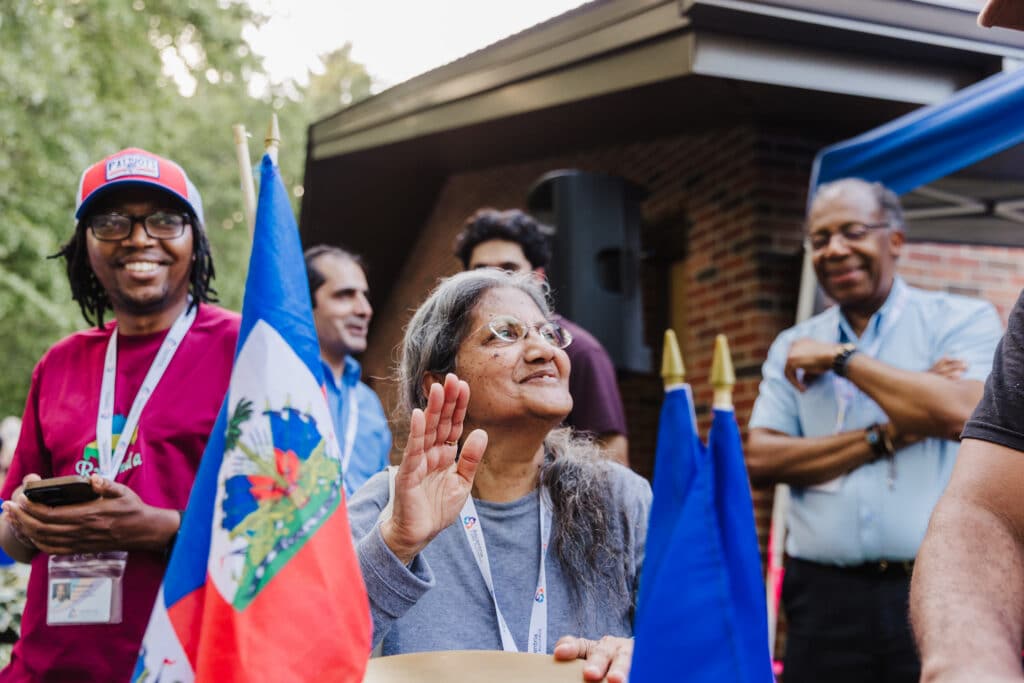
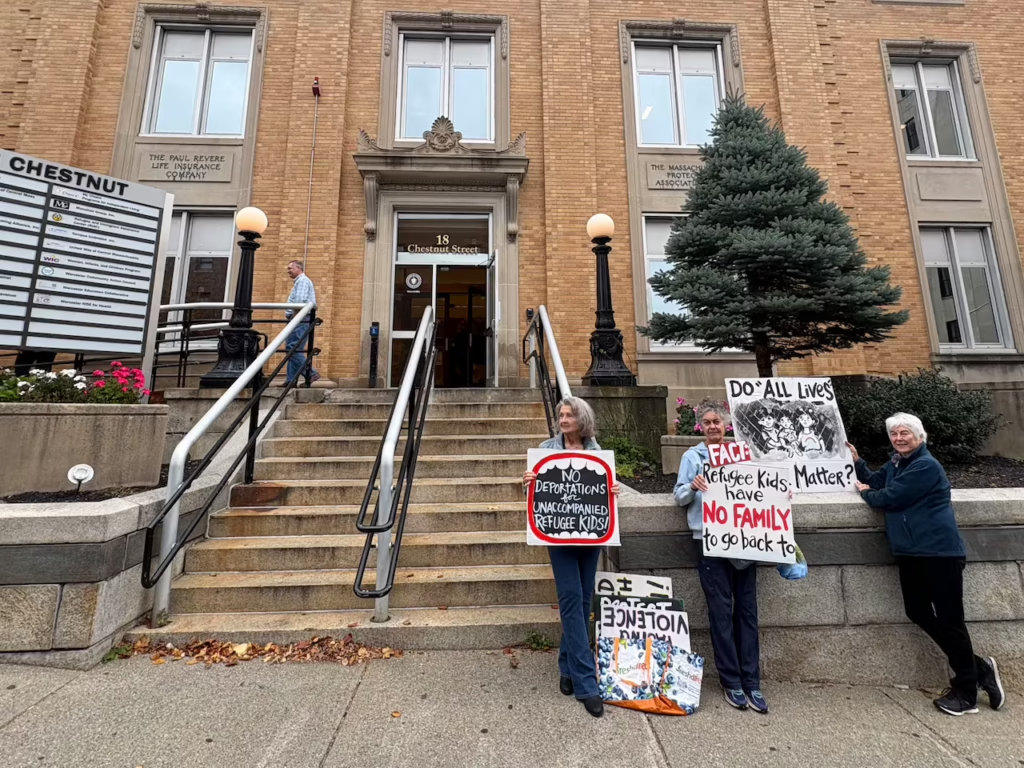
Featured image: Advocates with signs outside Ascentria Care Alliance in Worcester, at a press conference on removal orders for unaccompanied immigrant children on Nov. 5, 2026.(Irene Rotondo/MassLive)
By Irene Rotondo | IRotondo@masslive.com
WORCESTER — Pink flower decals dot the cream-colored walls of a Massachusetts bedroom. Winnie-the-Pooh sits among a neat line of stuffed animals on the headboard.
The 17-year-old girl who lives there is an immigrant with no parents or guardians in the U.S., who came to the country alone, on foot, two years ago. She is learning English and dreaming of going to college.
She is in foster care through Massachusetts’ Unaccompanied Refugee Minors Program, a state program for immigrant children who enter the country alone, administered in Worcester through the New England-area Ascentria Care Alliance foster agency group.
This fall, the 17-year-old girl received an order of removal from the U.S. government.
If the order is upheld, in mere weeks, she could be forced to leave the country where she has spent the past two years rebuilding her life and return to the place she fled at 15.
“I think it’s unfair,” the girl told MassLive in an Oct. 30 video interview translated from Spanish. She sat by the window in her room, her made bed visible in the back corner.
“We are minors in this country and we are studying. I’m focused on my studies,” she said.
MassLive is withholding the name of the 17-year-old due to her age, pending immigration case and position in foster care.
At a Thursday press conference at the foster agency’s Worcester headquarters, Rep. Jim McGovern, D-2nd District, said Ascentria staff told him “most of the unaccompanied children they work with have received removal orders at this point,” with the youngest being 14 years old.

McGovern said he was “horrified by” the removal orders, which he also called “beyond cruel” and “depraved.”
Ascentria supervising attorney Angela Snyder said the orders, which the agency began receiving in late August and early September, reflect a change in how some immigrant children’s cases are being handled.
In the past, Snyder said, immigration judges could terminate removal proceedings for some children who had already received Special Immigrant Juvenile (SIJ) classification and were waiting for a visa to become available so they could apply for green card status and permanent residency.
Now, she said, that classification — which comes by way of a court finding it was more dangerous for the child to return home than stay in the U.S. — is no longer necessarily enough to stop a removal case from moving forward.
“It’s the policy that has changed,” Snyder said.
A years-long path toward permanent residency
The 17-year-old girl currently in Ascentria’s Worcester-based program arrived at the U.S. border when she was 15. She spent weeks traveling hundreds of miles on foot in November 2024, without her family and alongside strangers.
“Well, the journey was so difficult. It was so difficult, in fact, that I thought I wouldn’t make it,” she told MassLive.
She hoped to reunite with her older sister and pursue an education she said girls in her home country are denied.
After she crossed into Texas in November 2024, immigration authorities took her into custody. She spent about two months in federal Office of Refugee Resettlement (ORR) shelters for unaccompanied immigrant minors before being connected with a foster placement in Massachusetts through Ascentria.
Now, she is learning English and catching up in school. She plays basketball and volleyball, has taken acting and art classes, joined after-school clubs and worked with a tutor. Over the summer, she volunteered and made friends through school and summer classes.
Her foster mother, whose name is being withheld due to her position in the foster care system, recalled the teenager coming downstairs crying after learning from her lawyer that a removal order was coming.
The girl has 30 days to appeal the removal order through her lawyer, after which it could become final if her appeal is unsuccessful.

Another Ascentria foster parent, Grace, said the children in the program arrive in the United States for various and usually immensely dangerous reasons — ones that a general American citizen may have a hard time conceptualizing.
“Children don’t leave safe situations that are good for them. They just don’t do that,” said Grace, who asked that her last name not be used because she is a foster parent.
“Looking at it from an American perspective, it’s really hard to understand what economic strife and poverty does to you as a human being,” she continued.
“It’s really hard to understand what it’s like when your basic needs are not met for a really long period of time, and what that does to a person.”
“Our kids come here walking,” she said. “I often say our kids come here running, and asking for help.”
Her own foster child, who has not received an order of removal, is living in fear after repeatedly hearing what is happening to other children in the program. Grace shared a statement he wrote with MassLive.
“My desire is to stay in the country and fulfill my dreams,” he wrote.
“The truth is that I feel safe and grateful for the opportunities I’ve received here. I don’t want to have to leave this place because I’ve started building my future,” he said. The young man has graduated from high school and is now enrolled in college studying HVAC, he wrote, with hopes of earning professional certifications and building a career in the field.
“I have a lot of dreams to fulfill, and I don’t want all the effort I’ve put so far to go to waste,” he wrote.
“And one more thing, I didn’t come to take anything from anyone. I came to build my own future.”
How the foster program works
Ascentria is the sole provider in Massachusetts for the Unaccompanied Refugee Minors Program (URMP), which is funded and overseen by the federal ORR and jointly administered by the state Department of Children and Families (DCF) and its Office for Refugees and Immigrants (ORI).
Some children who enter the program were initially classified by the federal government as “unaccompanied alien children,” a legal designation for children who enter the country without lawful immigration status and without a parent or legal guardian available in the country to care for them.
Children initially placed in that ORR federal custody can later be referred to longer-term programs, such as the URMP, when they cannot be placed with an appropriate sponsor. Including Massachusetts, there are 27 URMPs across 15 states and Washington, D.C., with multiple programs in states like California, Michigan, New York, Texas, Virginia and Washington.

However, being placed in foster care does not itself provide a child with legal immigration status. Snyder explained that at Ascentria, the legal team will help put children on a path toward a green card by helping them pursue Special Immigrant Juvenile (SIJ) classification, which requires specific findings from a state juvenile court.
Among them, a court must find that reunification with one or both parents is not viable because of abuse, neglect, abandonment, or a similar reason and that returning the child to their home country is not in their best interest.
The SIJ classification can put a child on a path toward lawful permanent residency — but limits on the number of immigrant visas available can leave SIJ recipients waiting years before they can take the next step toward a green card.
For some of those children, that waiting period previously came with another protection that has also now changed.
What changed for immigrant foster children
Beginning March 7, 2022, U.S. Citizenship and Immigration Services (USCIS) granted some young people with approved SIJ classifications “deferred action” if they could not immediately apply for permanent residency because no immigrant visa was available, Snyder said.
Deferred action did not grant permanent legal status or guarantee a green card, Snyder explained, but it could temporarily protect those young people from removal while they waited for a visa to become available and allow them to apply for work authorization.
That policy began to change in June 2025, when USCIS rescinded the deferred-action process for SIJ recipients.
Though that action was later stayed by a federal court, in April 2026, USCIS announced another rescission of the deferred action policy — this time applying to new SIJ petitions filed on or after May 10, 2026.

Snyder said she began seeing the effects more broadly in immigration court by late August and early September, when Ascentria started to receive removal orders for numerous unaccompanied children it represents. Those children included young people both with and without deferred action, she said.
At the same time, some clients’ immigration hearings were abruptly accelerated. Snyder said hearings originally scheduled as far out as 2027 were moved up to days or weeks away, sometimes with just a week or 10 days’ notice.
“When they first came in, it was like shock and awe,” Snyder said. “We could not believe that this was happening. This is just very out of the ordinary as far as our course of business goes.”
But the orders kept coming, Snyder said, leading her to believe what Ascentria was seeing is going far beyond individual cases. At some hearings, immigration judges are treating her clients’ approved SIJ petitions as “speculative relief,” allowing removal proceedings to move forward even as those children remain on a path toward permanent residency.
Snyder said other deferred-action grants are also no longer being renewed for some young people, potentially jeopardizing their ability to renew work permits.
“These removal orders are just the most recent policy change in a long line of changes that have been implemented for the purpose of impacting this particular group,” Snyder said.
“This administration seems to be targeting the unaccompanied youth as a whole.”
In response to questions from MassLive, USCIS referred questions about removal orders to the Justice Department’s Executive Office for Immigration Review, which oversees the nation’s immigration courts and issues removal orders.
USCIS also pointed to federal materials outlining its memorandum of changes to deferred action for SIJ and a recent agency report raising concerns about fraud, criminal histories, gang ties and other potential abuses within the SIJ program.
“We’re seeing these policies are being implemented across the board in ways that sort of just break down slowly, but very methodically, all of the benefits that had been previously built into the immigration system, to protect this particularly vulnerable group of individuals,” Snyder said.
‘This cannot be who we are’
On Thursday, Rep. McGovern called the changes “horrifying” during Thursday’s press conference, which drew roughly 50 foster parents, faith leaders and other community members.
“This cannot be who we are,” he said.
McGovern said the administration also ended its contract with an organization that provided legal services and representation to unaccompanied minors over the summer, a change he said jeopardized due process for more than 100 young people and directly affected Ascentria’s funding.
Asked what could be done immediately for children already facing removal, McGovern said he planned to speak with Rep. Jamie Raskin about ways to “put the brakes on some of this stuff.”
He said he would work with Ascentria and community advocates and “work on a strategy that we can share with you in the next couple of days.”
McGovern also pledged to push for funding for legal services and due-process protections. He said broader congressional action would have to wait until after Jan. 3.
Two sisters facing separation again
For the 17-year-old girl, the fight over immigration policy is also deeply personal.
Her older sister made a similar journey years earlier, coming to the United States at about 10 years old and later entering the same foster-care system.
She is now a college senior in Massachusetts and has lived with a different foster mother. The sisters speak regularly and see each other during school breaks.
Neither wanted to leave their family, the older sister said. But both saw coming to the U.S. as an opportunity for a safer and more stable future.
“Sometimes you have to make the sacrifice of being far away from your family to better sustain yourself … All of us want to be together, but life just doesn’t work like that,” the girl’s older sister said.

“I had a better chance at becoming somebody that I would look up to if I had the opportunity of being here,” the sister said. When she’d originally arrived in the U.S. with their father, she ended up in Massachusetts foster care because she said he was deported — something the sister described as being “really painful.”
Now, after each traveled to the U.S. separately, the sisters face the possibility of being separated again.
“And then now that [my sister] is the only biological family member that I have close to me, and I hear that she’s also about to be ripped away from me. It’s just … ” the sister’s voice trailed off.
She then described the day-to-day uncertainty.
“To know that none of this is really 100% certain, and that I could be just taken away at any point in the day. It’s a scary thing to live with,” she said.